



Managing a physical office can be costly and time-consuming for modern businesses. Rent, utilities, maintenance, and long-term leases often create unnecessary financial pressure, especially for startups and growing companies.
The benefits of virtual office rental offer a smarter alternative—providing a professional business address and essential office services without the need for a physical workspace. By adopting a virtual office, businesses can reduce overhead costs, improve operational efficiency, and maintain a credible professional presence.
This guide explores how the benefits of virtual office rental support modern business growth, enhance operational efficiency, and align with today’s flexible, digital-first business environment.
A virtual office rental is a service that provides businesses with a professional address, mail handling, phone answering, and sometimes meeting room access—without the need to lease a physical office.
It allows companies to maintain a professional image, comply with business registration requirements, and operate remotely. Businesses of all sizes, especially startups, freelancers, and SMEs, can benefit from the flexibility and cost-efficiency of virtual offices.
Virtual office rental combines professional infrastructure with operational flexibility, enabling businesses to maintain a physical presence while working remotely. These services are designed to support modern, location-independent operations.
Common Virtual Office Services Include:
Growing a business today doesn’t always mean renting a large office or managing high overhead costs. Virtual office rental offers a smarter, more flexible way to build a professional presence while staying agile. It supports modern work styles, reduces expenses, and helps businesses scale faster—without unnecessary complexity.
Here are the core benefits driving the adoption of virtual offices:
Quick Summary:
A virtual office rental helps businesses cut costs, build credibility, stay flexible, and scale faster, all while maintaining a professional presence. For startups, remote teams, SMEs, and international companies, it’s a smart, future-ready solution that supports growth without unnecessary overhead.
Virtual offices are particularly strategic in Bangladesh’s business ecosystem. With rising commercial rents and increasing remote work adoption, businesses are choosing virtual offices to stay competitive.
Let’s examine the cost savings and adoption of virtual office rentals in Bangladesh with the help of a column chart, according to the Strategic Importance of Virtual Office :
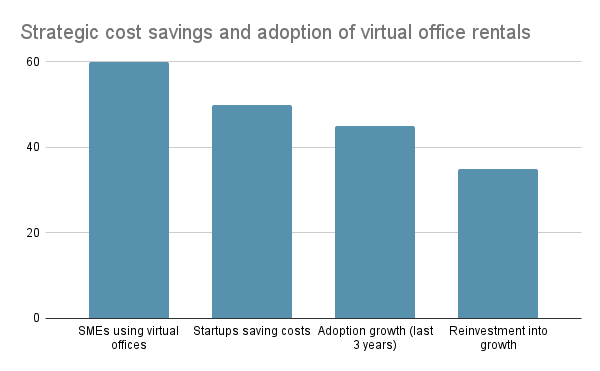
According to this column chart, we can see:
Businesses reinvest 38% more capital into growth, marketing, and talent acquisition thanks to these savings.
These figures demonstrate that virtual offices are not just a cost-saving tool—they are a strategic enabler for growth, professionalism, and market expansion. Companies can maintain a credible presence, operate efficiently with remote teams, and redirect resources toward high-impact business initiatives.
In short, Virtual office rentals in Bangladesh combine cost efficiency, flexibility, professional credibility, and growth enablement, proving their vital role in the country’s competitive business ecosystem.
Choosing the right office setup directly impacts a business’s cost, flexibility, and growth potential. While traditional offices offer physical presence, virtual office rentals provide a modern, efficient alternative designed for today’s remote and scalable business models.
The table below highlights the key efficiency differences between Virtual Office Rental and Traditional Office setups to help businesses make an informed decision.
| Feature | Virtual Office Rental | Traditional Office Rental |
|---|---|---|
| Monthly Cost | $50–$200 | $500+ (rent + utilities) |
| Flexibility | High (scale up/down anytime) | Low (long-term lease) |
| Administrative Tasks | Outsourced | In-house (requires staff) |
| Professional Image | High (prestigious address) | High (if location is good) |
| Remote Work Support | Excellent | Limited |
| Market Expansion | Easy, multiple cities | Expensive, limited locations |
This comparison shows why virtual offices are increasingly preferred by startups, SMEs, and even international businesses looking for market entry.
In short: Virtual offices minimize operational costs, offer faster setup, and support flexible scaling, while traditional offices demand higher investment and long-term commitments.
Selecting the right virtual office provider is crucial for maintaining professionalism, compliance, and long-term business flexibility. A well-chosen provider supports smooth operations, legal readiness, and scalable growth without hidden risks.
Before making a decision, consider the following key factors:
In short:
A credible address, flexible services, transparent pricing, and reliable support define a strong virtual office provider.
Beyond basic features, strategic selection of a virtual office provider can significantly impact business efficiency and expansion speed. Smart choices reduce risk and maximize long-term benefits.
Follow these practical tips for better decision-making:
These insights help businesses avoid hidden limitations and ensure long-term operational success.
Virtual office rental is more than a cost-saving option—it is a strategic business tool. By offering flexibility, professionalism, and operational efficiency, it empowers businesses to grow without unnecessary infrastructure costs.
For startups, SMEs, and international companies operating in Bangladesh, virtual office rental provides a scalable foundation for long-term success—allowing resources to be redirected toward growth, innovation, and talent.
If you’re planning to register, expand, or operate efficiently, a virtual office solution can be your smartest starting point.
Prices range from $50–$200/month, depending on location and services.
Yes, it is ideal for startups seeking credibility and cost savings.
Virtual offices are more flexible, cost-effective, and ideal for remote teams, while traditional offices may suit established, high-traffic businesses.
Typically, a professional address, mail handling, receptionist support, and meeting room access.
Many providers offer support for registration, licensing, and compliance for local and foreign companies.